Adaptive Clothing Size Guide NZ

Ordering online shouldn’t be a guessing game. Use this guide to measure a comfortable garment you already own and compare it with our product measurements to help choose the right EaseWear size.

Tip: NZ/AU clothing sizes can vary between brands, so checking the measurements in centimetres is the most reliable way to find the best fit.

  • Designed for Comfort

    Our garments often feature extra-wide cuts or adjustable closures. Measuring your favorite current item ensures you get that same familiar comfort.

  • Reduce Returns

    Taking two minutes to measure now saves you the hassle of a return later, getting your helpful clothing to you faster.

  • Local NZ Support

    Still unsure? Our New Zealand team is just a phone call or message away to help you pick the right size.

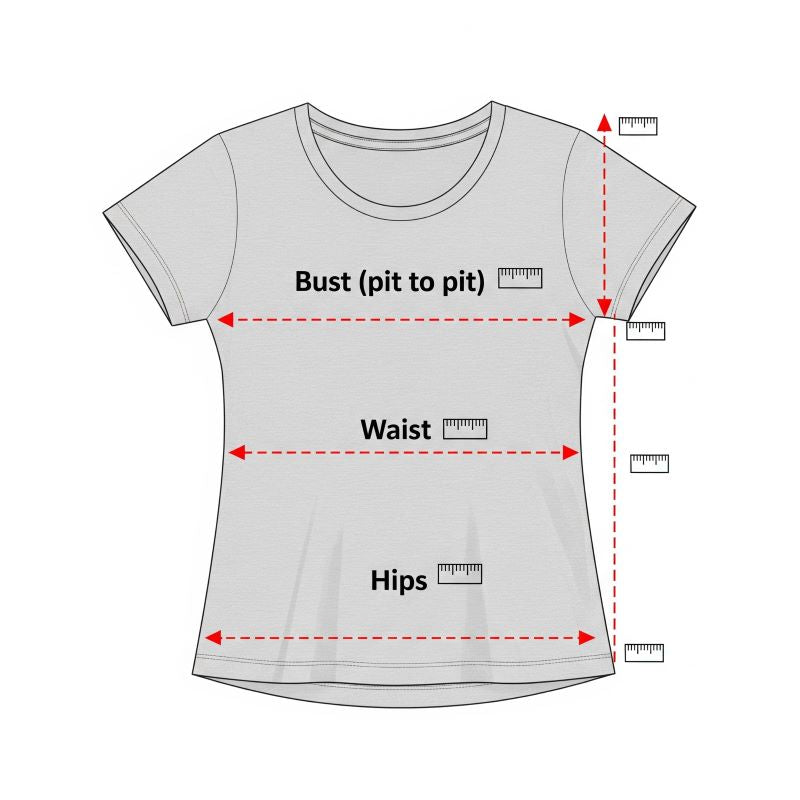
EaseWear guide illustrating where to measure bust, waist, and hips on a top garment to ensure a comfortable fit for adaptive clothing.

Tops

To find the best fit, lay a comfortable top you already own flat on a table and compare its measurements with the product size guide.

Bust: Measure straight across from armpit to armpit

Waist: Measure straight across the narrowest part

Length: Measure from the top of the shoulder to the bottom hem

Hips: Measure 20cm below the waistline, straight across

Approximate NZ/AU size guide (body chest): M 96–102 cm (38–40") | L 104–110 cm (41–43") | XL 112–118 cm (44–46") | XXL 120–126 cm (47–49")

Use this as a general guide only. Because sizing varies between styles, always check the measurements shown on the individual product page before ordering.

Shop Men's top

Approximate NZ/AU size guide: M 12–14 | L 16–18 | XL 18–20 | XXL 22–24 

Use this as a general guide only. Because sizing varies between styles, always check the measurements shown on the individual product page before ordering.
Shop Women's Top
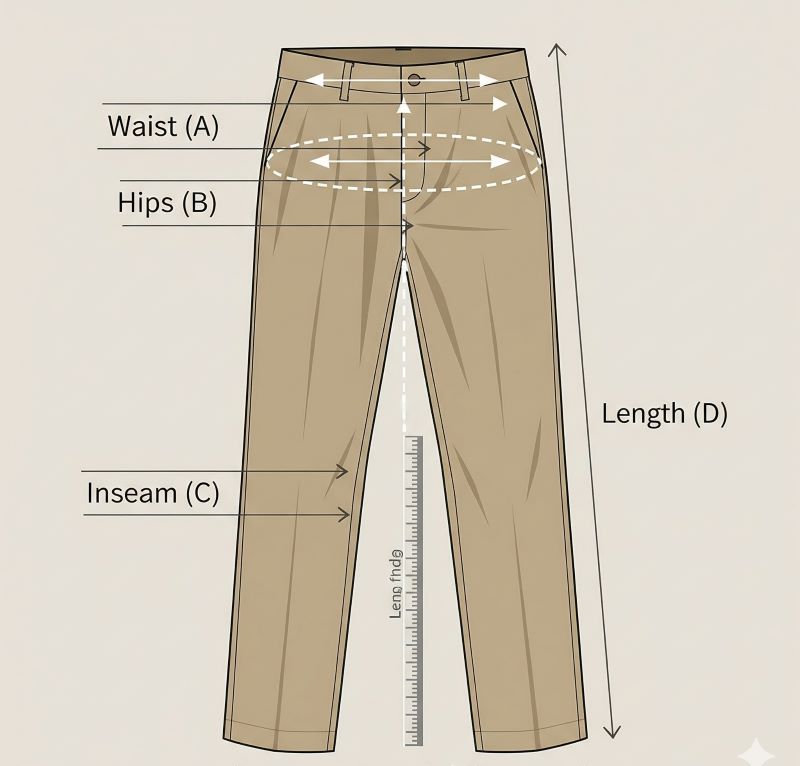
Diagram showing the correct placement of a tape measure for waist and inseam on pants, used for sizing adaptive trousers for seniors.

Pants

To find the best fit, lay a comfortable pair of pants you already own flat on a table and compare the measurements with the product size guide.

Waist: Measure straight across the top of the waistband.

Hips: Measure straight across the widest part of the pants, usually about 20cm below the waistband.

Inseam: Measure from the crotch seam down to the bottom hem.

Length: Measure from the top of the waistband to the bottom hem.

Size chart for men's adaptive full open side pants, showing waist, hip, length, leg opening and thigh measurements in cm for sizes M to 2XL/3L

The chart shows the measurements of pants themselves (in cm), not body measurements.

Approximate NZ/AU waist guide: M 32–34" | L 36–38" | XL 40–42" | 2XL/3XL 44–48"

Please always check the measurements shown on the individual product page before ordering.

Shop Men's pants

Approximate NZ/AU size guide: M 10–12 | L 12–14 | XL 14–16 | XXL 16–18 

Use this as a general guide only. Because sizing varies between styles, always check the measurements shown on the individual product page before ordering.

Shop Women's Pants
Simple bra measurement illustration showing overbust and underbust measurement lines in blue with a black body outline.

Bras

To find your bra size, take two measurements: your underbust and your overbust.

Underbust:
Wrap the measuring tape firmly around your ribcage, directly underneath your bust. Keep the tape level all the way around and snug, but not uncomfortably tight.

Overbust:
Measure around the fullest part of your bust, keeping the tape level around your body. For the most accurate result, wear a non-padded bra while measuring.

Finding Your Cup Size

Once you know your usual NZ/AU bra size, use the product-specific size chart below to choose the right EaseWear size.

Footwear

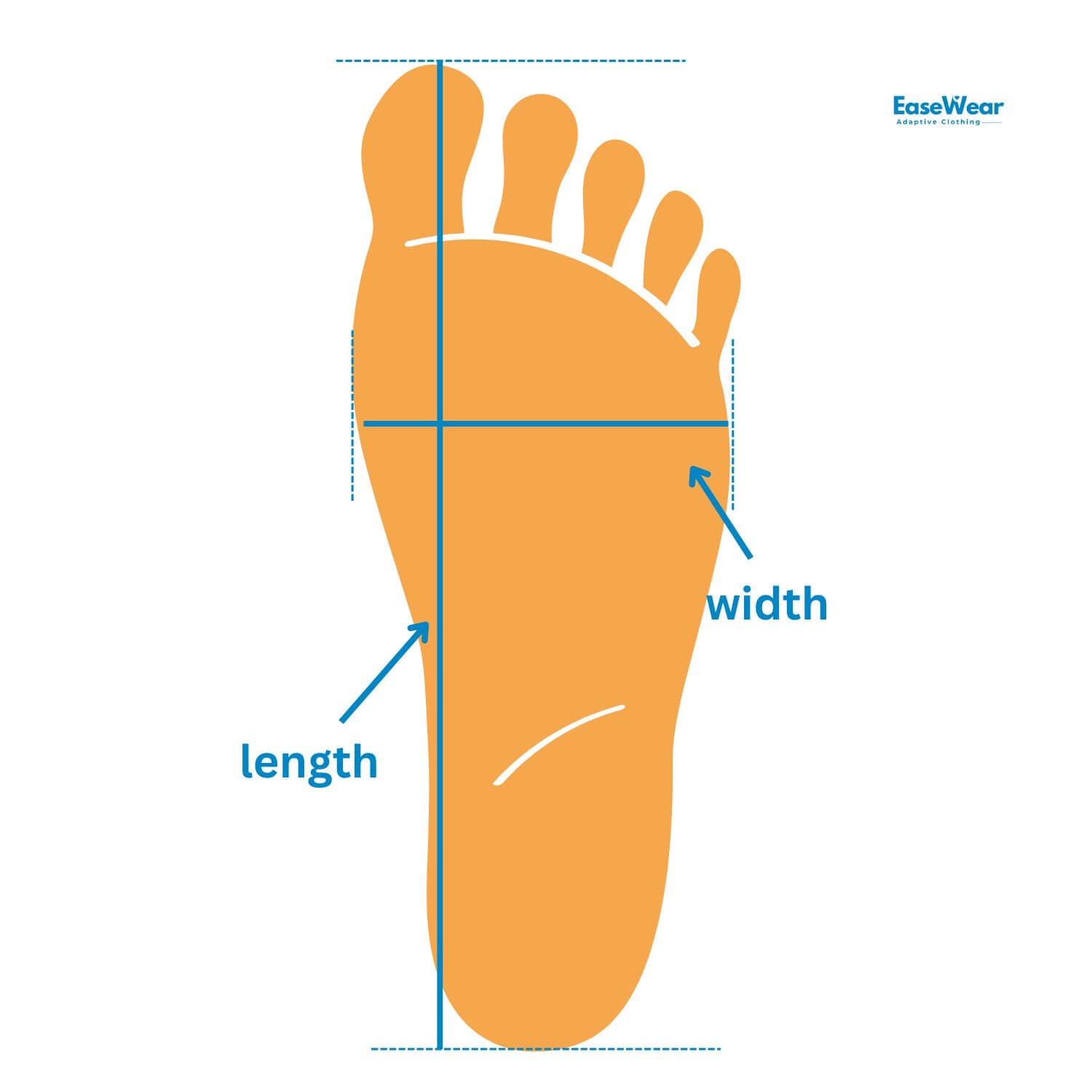
To find the best fit, measure your foot length in centimetres and compare it with the product size guide.

How to measure: stand on a piece of paper, mark your heel and longest toe, and measure the distance between them.

Width: measure across the widest part of your foot if you have wide, swollen, or bandaged feet.

Around foot (for swollen feet): wrap a soft tape measure around the fullest part of your foot. Keep it snug, not tight. Compare it with the "Around Foot" measurement in our footwear comparison table.

Height (for swollen feet): measure from the sole up to the highest point the shoe needs to cover, such as the top of the swollen area, the ankle or a bandage. Compare it with the "Height" measurement in the table.

For the best fit: add 0.5-1 cm to your foot length for comfort.

Tip: If your feet are different lengths, use the larger measurement.

Read our step-by-step guide to measuring swollen feet

Illustration showing how to trace and measure foot length and width to determine the correct size for extra-wide adaptive footwear and slippers for swollen feet.

length: stand on a piece of paper, mark your heel and longest toe, and measure the distance between them.

Width: measure across the widest part of your foot if you have wide, swollen, or bandaged feet.

Around foot: wrap a soft tape measure around the fullest part of your foot. Keep it snug, not tight. Compare it with the "Around Foot" measurement in our footwear comparison table.

Still unsure about your size?

We are here to help you to find the perfect fit.